As the cornerstone of data-driven cycling, power meters have become a must-have for both recreational riders and serious athletes alike.If you’ve ever wondered “which power meter is right for me?” or how crank, spider, and pedal power meters stack up against each other, this guide breaks down their key differences in accuracy, installation, versatility, and more to help you pick the perfect power meter for your needs.
Power Meter Placement: How Installation Location Impacts Performance
Before you geek out over the specs, start with the basics: where’s this thing gonna mount?The spot you slap your power meter on directly dictates how it grabs data, how accurate it is, and how it actually works for you—that’s the most important thing to figure out before you buy.
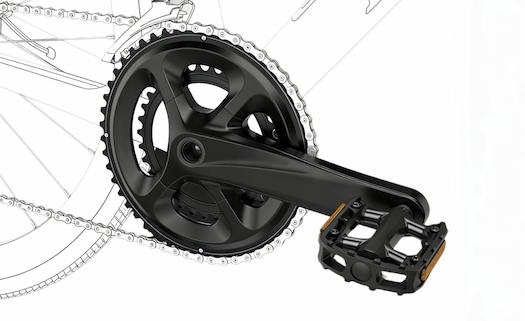
Crank Power Meters
They attach to your crank arms and come in single‑sided and dual‑sided versions.Single-sided meters read your left leg and estimate total power;dual-sided ones measure both legs independently for better accuracy.
Pros: Low barrier to entry and high cost performance, with proven aftermarket solutions to retrofit stock cranks.
Cons: Dual-leg models come with a significantly higher price tag than single-leg options.
Pedal Power Meters
Spider Power Meters
To install a spider power meter correctly, you first need to know your crank type:
Direct-Mount Cranks: Two-piece design where the crank arms and spider are separate, letting you remove/replace the spider independently. This is the standard, compatible configuration for most spider power meters.
Integrated Cranks: One-piece units where the crank arms, spider, and bottom bracket are molded together, with no way to remove the spider separately. Iconic examples include stock Shimano Dura-Ace (DA), Ultegra (UT), and 105 cranks, which are not compatible with off-the-shelf spider power meters.
Head-to-Head Comparison: Accuracy, Ease of Install, Durability & More
Beyond placement, this side-by-side breakdown of key metrics will help you decide which power meter fits your needs:
| Crank Power Meters | Pedal Power Meters | Spider Power Meters | |
| Accuracy | ±1% (dual-leg) ±2-3% (single-leg) |
±1% – ±2% | ±1% |
| Installation Difficulty | ★★★☆☆ | ★☆☆☆☆ | ★★★★☆ |
| Core Features | Power, cadence, left/right balance (dual-leg) | Power, cadence, left/right balance, pedal smoothness, torque effectiveness | Power, cadence, left/right balance, pedal smoothness |
| Battery Life | long battery life | Standard battery life | Ultra-long battery life |
| Crash Damage Risk | Medium | High | Low |
| Price | lowest | Premium | Mid-range |
Who Should Choose Which Power Meter? A Buyer’s Guide
Crank Power Meters: Best for Beginners
- You’re on a budget under $150 and want to test the waters of power training
- You have an integrated crank (e.g., Shimano Dura-Ace / Ultegra / 105) and don’t want to replace your stock crankset
Pedal Power Meters: Best for Multi-Bike Riders
- You own multiple bikes and want one power meter you can swap between rides
- You don’t want to modify your stock crank or chainrings, and want a true “install and go” solution
- You have a higher budget, want dual-leg data, and want to skip the complex installation of spider power meters
Spider Power Meters: Best for Serious, Training-Focused Riders
- You follow a structured training plan, race occasionally, and need hyper-accurate power data to guide your workouts
- You want to track left/right balance and pedal smoothness to fix your form, reduce knee strain, and ride more efficiently
- You have a budget of $140-$350 and want a professional-grade, high-value setup